DATE OF FOUNDATION
2000
MEMBERSHIP OF LITAB
2002
PRESIDENT
Nordio Sandro
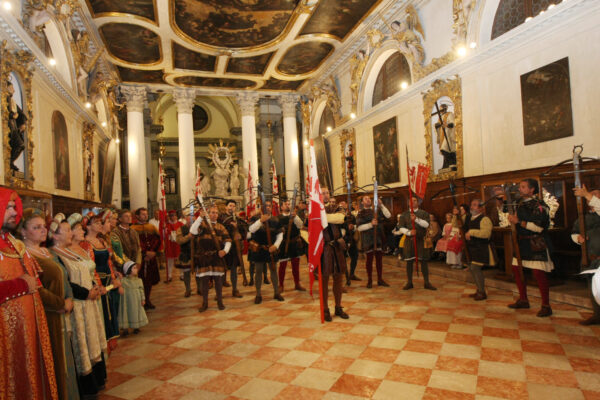
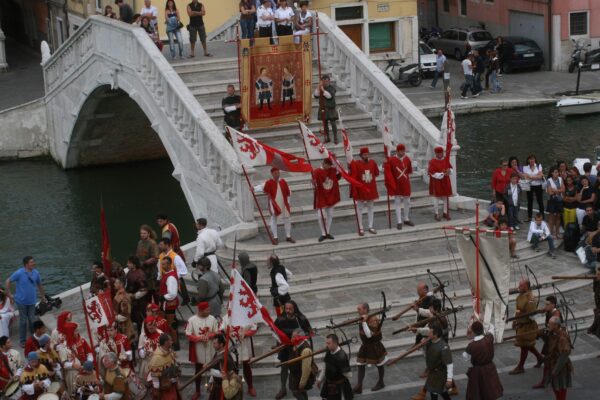
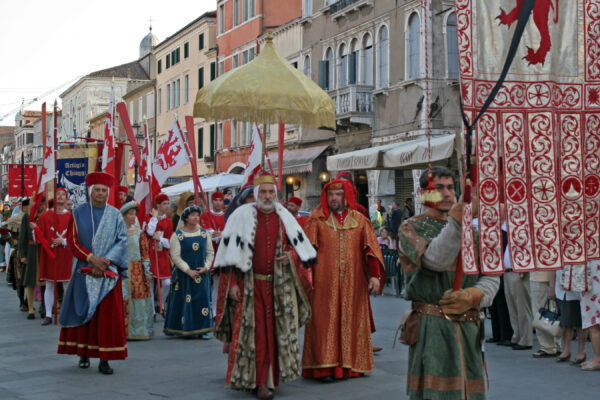
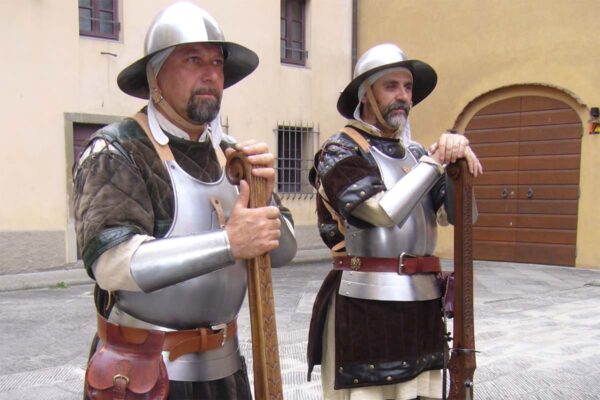
The Compagnia Balestrieri del Palio della Marciliana (Crossbowmen’s Guild of the Palio della Marciliana) was founded in 2000 to revive the ancient tradition of crossbow shooting, which had disappeared since the end of the 16th century, within the Palio della Marciliana, recreated in 1990. The guild competed for the first time in the Palio delle balestre grosse (Palio of the large crossbows) in June 2000.
The use of crossbows in Chioggia has been documented in city statutes and reforms of the City Council since 1200.
In the early 1300s, district leaders were obliged to bring all men aged between 16 and 35 to the shooting ranges for practice: nobles on weekdays and commoners on holidays.
A crossbow competition was held in the city during the May festivities dedicated to the city’s patron saints, and at Christmas; municipal statutes document this since 1350. The first prize was a scarlet brocade, the second prize was a crossbow including the crocco, and the third crossbowman won the target board. Only crossbowmen from Chioggia and Venice could participate in the Palios. On the third weekend of June each year, during the three days of the Palio, 500 participants take part in a grand 14th-century historical reenactment, which culminates in a competition between the crossbowmen of the five districts, amid a riot of banners and flags, splendid costumes, and decorations that create a perfect medieval atmosphere in the city.
The Compagnia Balestrieri della Marciliana di Chioggia participated as a delegation in the Litab national championship in Amelia in 2002, was admitted to LITAB in the fall of 2002, and participated for the first time in the national championship in 2003 in Barga.
Chioggia stretches to the extreme south in the heart of the Venetian Lagoon.
According to some historians, the first Chioggia was founded around 2000 BC by a colony of Pelasgians, a people from Asia Minor. While legend has it that it was founded by Clodius, who fled Troy in flames with Aeneas and Aquilus, Latin historians Cassiodorus and Pliny the Elder mention it as an important salt production center, the “Sal Clugiae.”
Favored by the flourishing salt trade, Chioggia’s importance grew to such an extent that in 1110 the city was chosen to host the bishopric, which was transferred here from Malamocco. A source of wealth in the Middle Ages, Chioggia’s salt and salt pans attracted the interest of Genoa and Venice, which, constantly fighting for dominance over the seas, clashed in the city in what would later be called the “War of Chioggia” (1379–1381).
Almost completely razed to the ground and incorporated into the domain of the Most Serene Republic, the city of Chioggia not only saw its freedom curtailed, but also witnessed a reduction in the number of salt pans and the imposition of heavy taxes on salt production. The city’s economy thus began a slow and inexorable decline, aggravated by a succession of plagues and famines (1400-1600).
Fortunately, economic recovery came from the sea when the population discovered its vocation for fishing.
When the Venetian Republic fell, it became a possession of the French first and then the Austrians. Chioggia became Italian with the Plebiscite of 1866.
Today Chioggia is one of the most populous cities in Veneto, with an economy based on tourism, the port, horticulture, and fishing.
Crossed by 74 streets and three canals reflecting colorful houses, stroll along the Riva Vena crossed by nine bridges, during the day, listen to the sounds, observe the colors of the boats reflected in the water, and at night lose yourself in the silence and savor the scents.
Chioggia is a city of art with 17 churches in its small historic center. Venetian patrician houses line the main street, where you can visit the Tower Museum with its clock, which has the oldest mechanism in the world.
Chioggia has two museums: the South Lagoon Museum, with traditional boats on the water, and the Diocesan Museum.
Chioggia and the beaches of Sottomarina and Isolaverde, with 10 kilometers of sandy shores and its seabed with the “Tegnue” Marine Protected Area, a paradise for divers with a variety of fish and colors reminiscent of tropical seas. Chioggia is an environment with countless bike rides along the banks of two rivers, Brenta and Adige, up to the Nordio forest, an integral nature reserve.
Headquarters
Corso del Popolo
30015 Chioggia (VE)

